DEVONIAN SOUTH
Arthropods
  • Home
  • Geology
    • Witpoort Fm
    • Baviaanskloof Fm
  • Localities
    • Waterloo Farm
    • Coombs Hill
    • Rabbit Ridge
    • Krom River Valley >
      • Impofu Dam
      • Lag Lens Deposit
    • Howison's Poort
  • Fossils
    • Waterloo Farm >
      • Vertebrates >
        • Jawless Fish
        • Placoderms
        • Acanthodians
        • Sharks
        • Ray-Fin Fish
        • Lobe-Fin Fishes >
          • Lungfish
          • Coelacanths
          • Tristichopterids
          • Tetrapods
      • Invertebrates >
        • Molluscs
        • Arthropods
      • Flora >
        • Algae
        • Cladoxyls
        • Sphenophytes
        • Zosterophylls
        • Lycopods
        • Progymnosperms
    • Coombs Hill >
      • Invertebrates
      • Flora
    • Rabbit Ridge >
      • Vertebrates
      • Invertebrates
      • Flora
    • Krom River Valley >
      • Invertebrates
      • Flora
    • Howison's Poort
  • BLOG
  • About
    • The Team
    • Media
    • Partners
  • Research
    • Papers published
    • Resources
    • Affiliates
  • more...
Overview

Arthropods are a diverse and highly successful group of invertebrates that belong to the phylum Arthropoda. With over a million described species, they make up approximately 80% of all known living organisms. Arthropods are found in almost every habitat on Earth, from deep ocean floors to the highest mountains, and they exhibit a wide range of forms and behaviors.​

Eurypterids


Picture
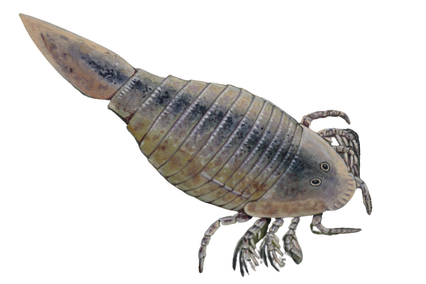
Painted reconstruction of a cyrtoctenid eurypterid by Maggie Newman
Picture
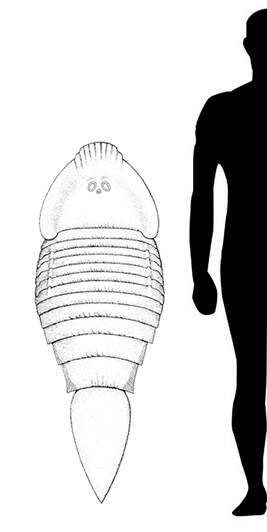
Cyrtoctenus wittebergensis next to a person of average height
Hibbertopterus sp.
​
Locality: 
Waterloo Farm
Age: latest Devonian
Holotype: AM 5750
Genus Distribution: South Africa and Euramerica

Cyrtoctenus was a large eurypterid of the Hibbetopterid family. This animal reached up to one and a half metres in length (1). A sweep feeding detritivore, it lacked the weaponry of more carnivorous forms, and hence, it has been described as a ‘gentle giant’ (2).

A comparable eurypterid, Cyrtoctenus wittebergensis was described from the Early Carboniferous-aged Waaipoort Formation (Witteberg Group) of South Africa, and included some relatively well-preserved remains of articulated body and leg segments (1). These allowed the reinterpretation of some less complete Hibbetopterid remains from Europe.

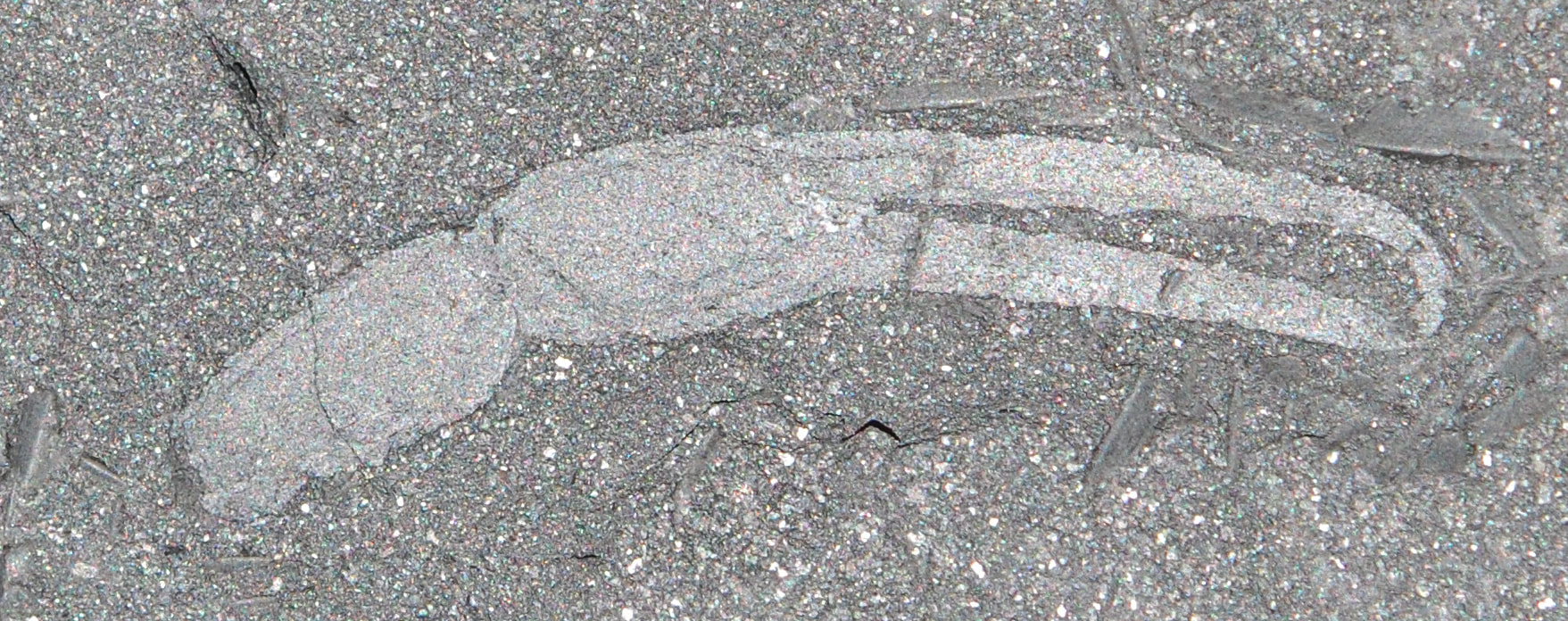
Undescribed remains of Cyrtoctenus from Waterloo Farm include a complete prosoma (head shield), and a remarkably well-preserved leg of an individual estimated to have been 1.2 m long. It would have had five pairs of legs attached to the prosoma, each with a set of combs, with which it would have raked the mud for food. Each comb had an opposing thumb-like finger which would have aided the movement of detritus into the animal’s downward facing mouth.

Occurring both at Waterloo Farm (Late Devonian) and in the Waaipoort Formation, Cyrtoctenus had lived prior to, and survived, the end Devonian mass extinction. It may however, have lived substantially longer. Referring to possibly the largest invertebrate trackway ever discovered (from the Ecca Group rocks near Laingsburg in the Western Cape) palaeontologist John Almond suggested that the trackway was formed by Cyrtoctenus, implying that the genus may have survived until the Permian Period some 100 million years later (2, 4).


SCORPIONS

Gondwanascorpio emzantsiensis

Locality: Waterloo Farm
Age: latest Devonian
Holotype: AM 7500
Genus Distribution: Endemic
​

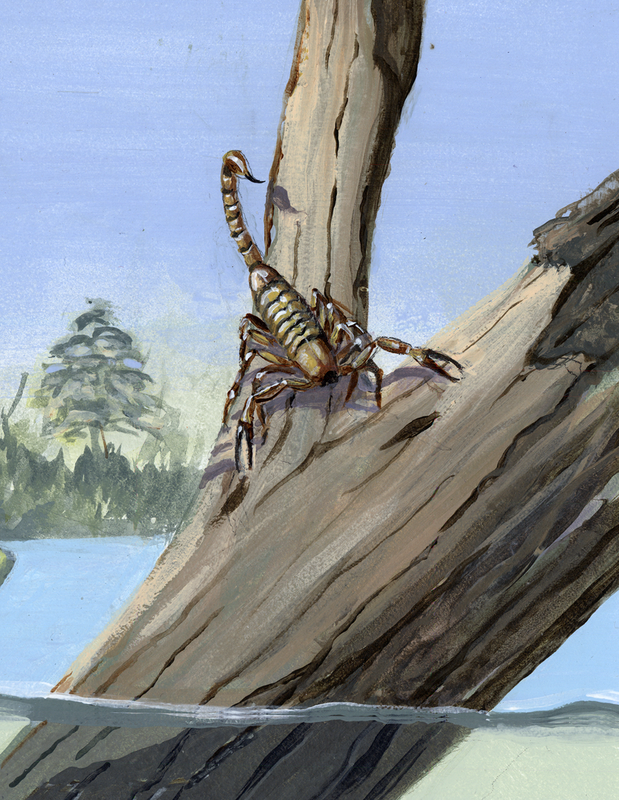
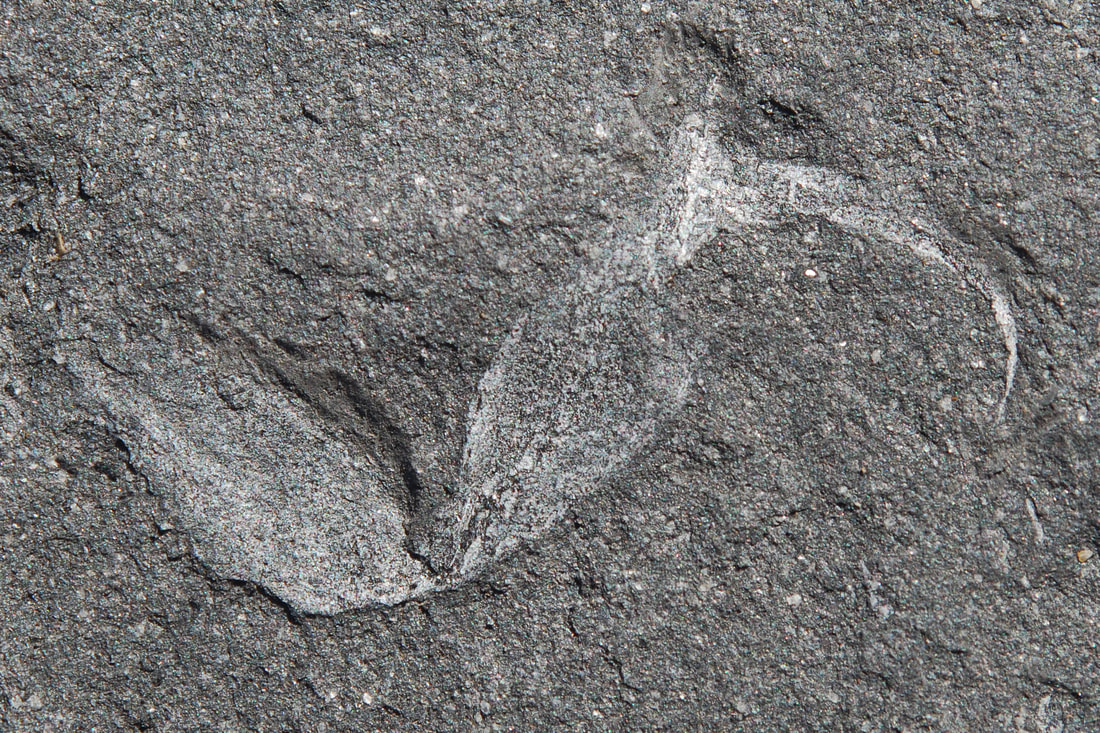
Gondwanascorpio emzantsiensis was described from extremely rare remains of an ancient species of scorpion from Waterloo Farm (1), including the stinger and the pincer. It is very likely that this early scorpion was a land-dwelling predator, although it’s (possibly soft bodied) prey have not yet been found.
​
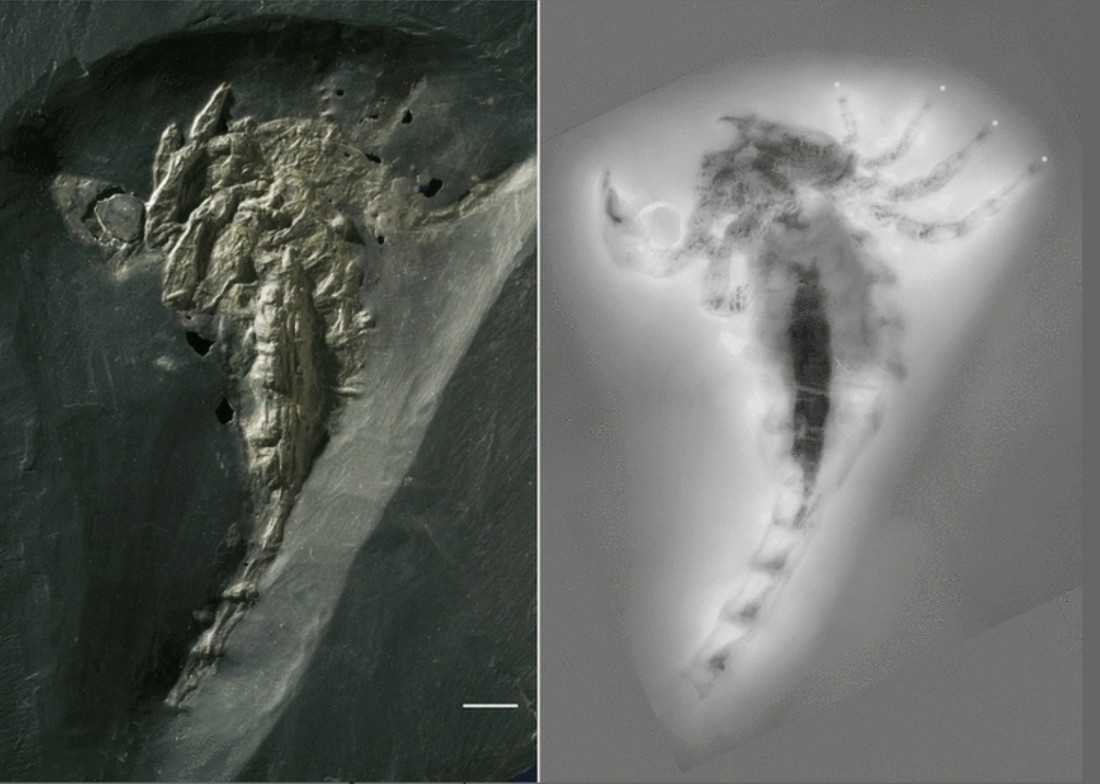
Although Gondwanascorpio is the earliest land animal known from the whole of Gondwana, scorpions had appeared by as early as 430 million years ago, as suggested by new finds in Wisconsin USA (2). There is still a lot of debate about whether the earliest scorpions on Earth were aquatic or land dwellers. Based on a remarkably well-preserved scorpion from the Devonian Hunsruck slate of Germany exhibiting book lungs (see below), it has been suggested that scorpions were already able to breathe air in the manner that their modern descendants do (3).
​
Picture
Painting of Gondwanascorpio emzantsiensis by Maggie Newman
Picture
Pincer of Gondwanascorpio from Waterloo Farm, about 35 mm long.
Picture
Stinger (telson) of around 23 mm from end to end. Photo by R.W. Gess.

References:​​
1) Waterston, C. D., Oelofsen, B. W., & Oosthuizen, R. D. F. (1985). Cyrtoctenus wittebergensis sp. nov. (Chelicerata: Eurypterida), a large sweep-feeder from the Carboniferous of South Africa. Earth and Environmental Science Transactions of The Royal Society of Edinburgh, 76(2-3), 339-358.
2) A 3m Scorpion- News 24
3) Gess, R. W. (2016). Vertebrate Biostratigraphy of the Witteberg Group and the Devonian-Carboniferous Boundary in South Africa. In Origin and evolution of the Cape Mountains and Karoo Basin (pp. 131-140). Springer, Cham.
4) Tracking an ancient denizen of the deep
5) Gess, R. W. (2013). The earliest record of terrestrial animals in Gondwana: a scorpion from the Famennian (Late Devonian) Witpoort Formation of South Africa: Arachnida. African Invertebrates, 54(2), 373-379.
6) This is the oldest scorpion known to science
7) Kuhl, G., Bergmann, A., Dunlop, J., Garwood, R. J., & Rust, J. E. S. (2012). Redescription and palaeobiology of Palaeoscorpius devonicus Lehmann, 1944 from the Lower Devonian Hunsrück Slate of Germany. Palaeontology, 55(4), 775-787

Devonian South

Powered by Create your own unique website with customizable templates.
  • Home
  • Geology
    • Witpoort Fm
    • Baviaanskloof Fm
  • Localities
    • Waterloo Farm
    • Coombs Hill
    • Rabbit Ridge
    • Krom River Valley >
      • Impofu Dam
      • Lag Lens Deposit
    • Howison's Poort
  • Fossils
    • Waterloo Farm >
      • Vertebrates >
        • Jawless Fish
        • Placoderms
        • Acanthodians
        • Sharks
        • Ray-Fin Fish
        • Lobe-Fin Fishes >
          • Lungfish
          • Coelacanths
          • Tristichopterids
          • Tetrapods
      • Invertebrates >
        • Molluscs
        • Arthropods
      • Flora >
        • Algae
        • Cladoxyls
        • Sphenophytes
        • Zosterophylls
        • Lycopods
        • Progymnosperms
    • Coombs Hill >
      • Invertebrates
      • Flora
    • Rabbit Ridge >
      • Vertebrates
      • Invertebrates
      • Flora
    • Krom River Valley >
      • Invertebrates
      • Flora
    • Howison's Poort
  • BLOG
  • About
    • The Team
    • Media
    • Partners
  • Research
    • Papers published
    • Resources
    • Affiliates
  • more...